

News Media in an Authoritarian Age
SUMMARY
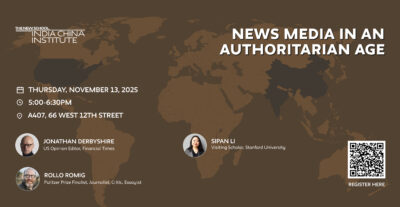
On November 13, 2025, India China Institute (ICI) hosted an in-person panel discussion on the shifting landscapes of news media in India, China, the US, UK, and beyond. Moderated by Manjari Mahajan, Co-Director of ICI, panelists discussed how regimes of India, China, the US, and the UK have tried to restrict what journalists and writers produce, as well as coping strategies that are being deployed in response. The panelists were Sipan Li, Visiting Scholar at Stanford University; Jonathan Derbyshire, US Opinion Editor at Financial Times; and Rollo Romig, a Pulitzer Prize Finalist Journalist.
Sipan Li is a visiting scholar at Stanford University, a scholar-in-residence at the University of California, Berkeley, and an associate professor at the Cheung Kong School of Journalism and Communication at Shantou University in China. A journalist, scholar, and feminist advocate, she has written extensively on public discourse, China's feminist movement, the development of women's NGOs, and social media activism.
Sipan Li noted that trends in Chinese journalism over the past decade include the undermining of institutional and investigative journalism, judicial and police control becoming a routine tool of repression, and smear campaigns being used to discredit journalists and undermine media credibility. Despite these challenges, journalists find ways to mitigate the negative effects of repression. Li explained that when a journalist conducts an interview for a major news story—even if the report is never published or is published but quickly deleted—it can still be shared in a bookstore event. The act of sharing itself becomes a process of creating content.
Jonathan Derbyshire is the Financial Times' US opinion editor. He was previously Managing Editor of Prospect, Britain's leading monthly magazine of politics and ideas, and Culture Editor of the New Statesman. Derbyshire has also written for a number of other publications, including The Guardian, The Observer, and the Times Literary Supplement. He emphasized the upheavals in the media landscape in the US, especially for international journalists who now face new challenges relating to visas and threats of summary deportation. But he also pointed to how US domestic media, such as NPR, PBS, and their member stations, have been targeted by the federal elimination of $1.1 billion allocated to public broadcasting. Derbyshire provided examples of how both traditional and new media organizations might respond.
Rollo Romig, who currently manages the Solutions Insights Lab at Solutions Journalism Network, pointed out that tactics used against journalists in India are manifold, from trolling and harassment to defamation lawsuits that distract journalists from their work to political pressure on newsroom editors. Despite the challenges journalists face, Romig expressed hope for Indian journalism. "Every time I go back to India, the thing that surprises me the most is how many young people I meet who are absolutely fervent about starting careers in journalism. These young people are incredibly brave, and I don't think this hunger for truth is something that can be suppressed," he said.
The panel discussion was followed by an interactive Q&A session covering the role of diaspora journalism, the complex relationship between democracy and journalism, and the importance of local context in shaping journalists' activism. The panelists also offered thoughtful insights on new forms of independent journalism—its innovations and limitations.
SPEAKERS

US Opinion Editor, Financial Times
Jonathan Derbyshire is the Financial Times' (FT) US opinion editor. He was previously Managing Editor of Prospect, Britain's leading monthly magazine of politics and ideas, and Culture Editor of the New Statesman. Jonathan has also written for a number of other publications, including the Guardian, the Observer and the Times Literary Supplement. In a previous life, he taught philosophy in several British universities.
Visiting Scholar, Stanford University
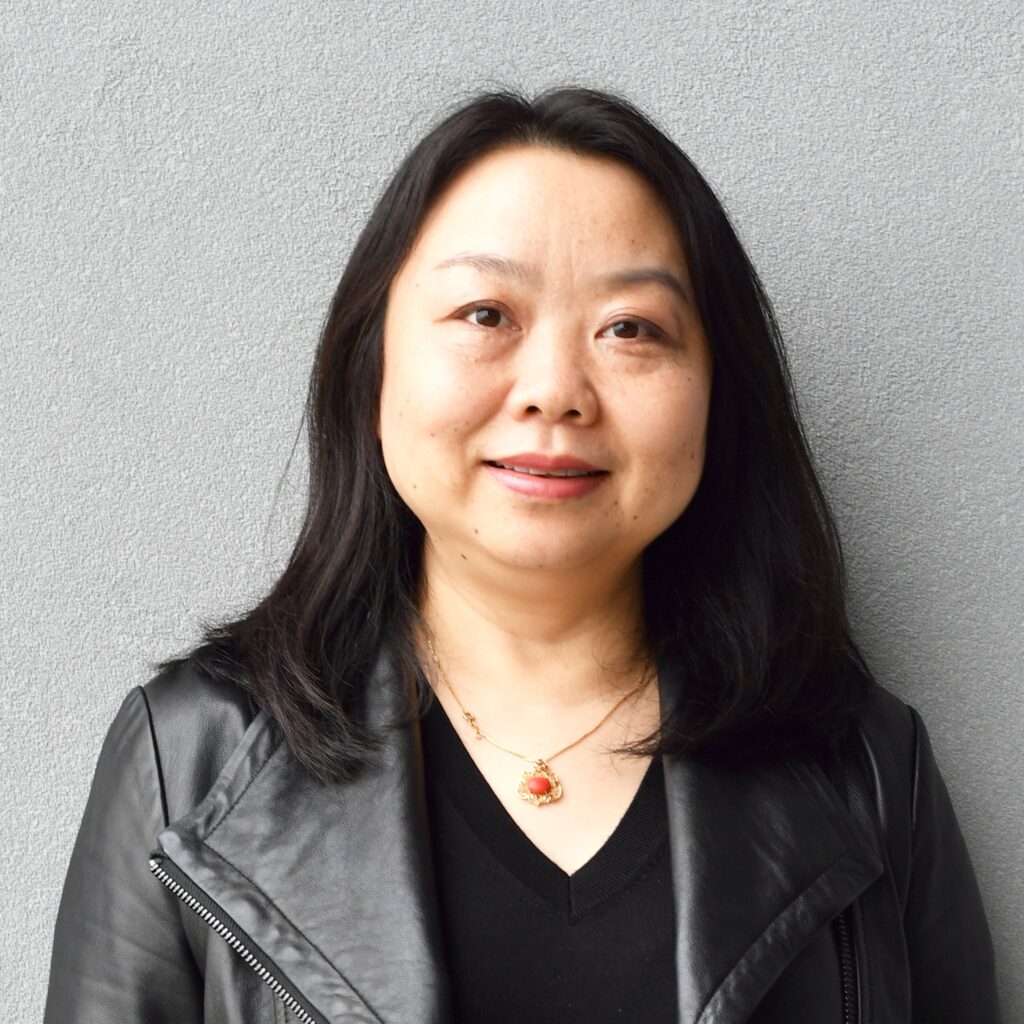
LI, Jun (also known as LI, Sipan, 李思磐), Ph.D., is a visiting scholar at Stanford University, a scholar-in-residence at the University of California, Berkeley, and an associate professor at the Cheung Kong School of Journalism and Communication at Shantou University in China. A journalist, scholar, and feminist advocate, she has written extensively on public discourse, China's feminist movement, the development of women's NGOs, and social media activism. Her doctoral research, Social Movement, Media, and the State: The New Feminist Movement with Communication as Core in Contemporary China (2003–2016), examines these dynamics in depth.
Pulitzer Prize Finalist, Journalist, Critic, Essayist
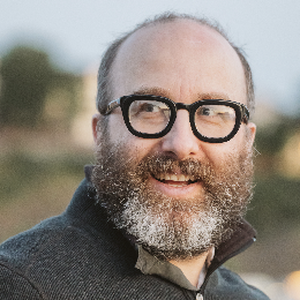
Born and raised in Detroit, Rollo Romig is a journalist, essayist, critic, and the author of Pulitzer Prize finalist "I Am on the Hit List: A Journalist's Murder and the Rise of Autocracy in India." He has been reporting on South India since 2013, most often for The New York Times Magazine. His book "I Am on the Hit List" is a gripping investigation into the mysterious assassination of a journalist in India, revealing the courage and vulnerability of those who are fighting the decline of democracy around the world.