
Singapore, August 24-25, 2026
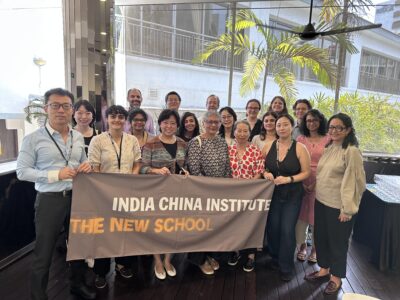
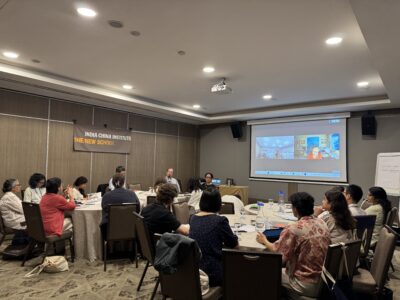
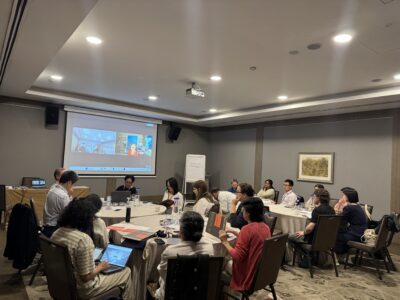
The field of global health is in remarkable disarray due to disruptions in a range of multilateral institutions, norms and agendas that have been unraveling since the pandemic. Such a rupture offers a unique opportunity to confront the limitations of how we have been thinking about public health and global health, and how we may want to theorize them differently. This was the starting point for the workshop, “Public Health in Asia: Plural Histories for Global Futures,” that was convened by the India China Institute (ICI) at the National University of Singapore on August 24–25, 2026. Seventeen fellows from nine different countries, and a range of disciplinary backgrounds, gathered over two days to discuss how histories and analyses of public health can be reframed.
The COVID-19 pandemic had revealed that many conventional assumptions about public health capacity did not hold; economic wealth, levels of development, regime type, and even widely accepted indicators of state capacity did not reliably predict how societies would manage the crisis. Strikingly, many Southeast and East Asian countries which hadn’t necessarily been deemed to be “well-prepared” nonetheless demonstrated significant resilience in the face of the pandemic. So one goal of the workshop was to study with care the history, political economy and sociology of public health in Asia, which have seldom been at the center of global health conversations.
The workshop also interrogated what the study of public health in Asia can teach us about how to think, write, and conceptualize public health differently. The participants sought not only to expand the geographical range of global-health history, but also to reconsider its categories, actors, and causal assumptions. The moment of disruption in global health requires new narratives which had to be animated by affirmative visions. The comparative and historical experiences of Asia provided an important intellectual site of inquiry, from which to expand our imagination and the range of possibilities about how public health systems are created and sustained.
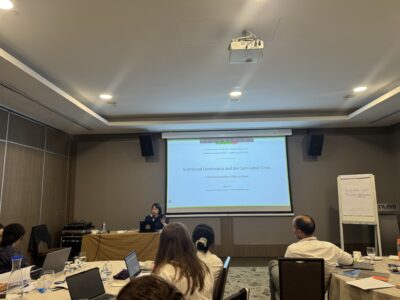
Opening the workshop, co-director Manjari Mahajan posited that Asia was an important site for rethinking the theory and epistemology of public health. She posed three clusters of questions for the group:
- How is public health in Asian countries shaped by and integrated within broader political and social processes, including those of state-making, political economy and geopolitics?
- What forms of knowledge have historically animated the field of public health and global health, and how does this map onto how public health has been studied and operationalized in Asian countries? How do our frameworks and categories of analysis change when we understand public health as embedded in projects of state-making, development, citizenship, and welfare rather than as a primarily technical or administrative field?
- What actors are typically missing from conventional accounts of public health? What has been the role of social movements, citizens, and grassroots communities? What is the consequence of foregrounding them in our analyses?
In his remarks, co-director Mark Frazier approached the same problem from a fiscal angle, observing that healthcare and pensions have quietly become some of the largest expenditures in many national budgets, surpassing defense spending in numerous cases, and yet are seldom examined as inherently political matters.
Four panels followed over the two days, exploring what Asia’s diverse histories and experiences reveal about the ways public health and global health have been understood.
Panel 1: Building Universal Health Systems: Institutions and State Capacity
The idea of “universal” health care is understood and implemented in diverse ways. Countries have pursued it through very different institutional arrangements, from collective public infrastructure to insurance-based systems, with distinct national political histories and social contracts determining governance structures. Jiwei Qian examined the drafting history of China’s Medical Insurance Law, which is as yet unsettled on long-term care insurance and provincial fund pooling even in its third revision. He proposed that legislative drafting and its paper trail provided a window into contestations and negotiations between different arms of the government. Madhurima Nundy noted that universal health coverage, despite its decade-long status as a UN Sustainable Development Goal, remains fundamentally a financing term that can obscure the varied underlying political histories. In her comparative study, she noted that Thailand, propelled by its rural doctors’ movement, attained near-universal coverage fifteen years before UHC became a global buzzword; China achieved it through initial work of collectivization and the barefoot doctors and then a later neoliberal reformulation in 2009; India has not yet achieved universal coverage for reasons that are fundamentally more political than technical. Saerom Kim posed a puzzle about Korea’s National Health Insurance, which was introduced in 1977 and expanded public coverage while also building one of the OECD’s more privatized systems, with roughly 90% of hospital beds now in the private domain. In the final paper, Priyadarshini Singh’s comparison of the Indian states of Karnataka, Rajasthan, and Odisha underlined the importance of political incentives and underlying social contracts for building health systems. In tracing the messy relationship between democratic electoral politics and investments in health, her research found that primary healthcare tends to become a government priority when it aligns with a chief minister’s own career incentives.
Panel 2: Histories of Public Health and Primary Care in Asia
This panel traced the different histories and genealogies of public health and social medicine in Asia. Marty Kirchner’s fieldwork in Zhejiang’s Qingtian county examines China’s “Common Prosperity” policy, asking whether its model of investment-led development treats health as an intrinsic and necessary prerequisite for development or simply a downstream consequence. Jonathan Kennedy argued that the steep rise in life expectancy in Mao-era China was driven less by economic growth than by the bottom-up political mobilization of the barefoot doctor system. Fellows suggested that this factor should be considered alongside other concomitant transformations of land reform and employment policy. Rama Baru traced the intellectual history of “social medicine” across Asia, from League of Nations’ programs through the 1937 Bandung conference to Alma-Ata, noting that colonial-era rural health campaigns were sometimes instruments of pacification alongside care. The panel’s final paper, from Manjari Mahajan, used the case of India’s southern state of Tamil Nadu to ask how health becomes a social and political priority, and how such an analysis points to the kinds of knowledge that should be considered relevant to constituting the history of public health.
Panel 3: Markets, Care Infrastructures and the Social Reproduction of Health
This panel’s theme was the broader infrastructures that are often considered peripheral to conventional public health systems but are nonetheless crucial to their functioning. These include unpaid family labor, food systems, medical education institutions, and private medical service industries that have grown largely outside public oversight. Ramya Kumar compared medical education in Sri Lanka and Nepal. Sri Lanka has had free and public medical education since 1945, a policy rooted in anti-colonial politics that predates the country’s 1948 independence. In contrast, Nepal, now home to sixteen for-profit medical schools, showcased the medical profession’s organized power and gatekeeping. Donata Bessey’s paper focused on Korean postpartum care centers where 80% of mothers pay up to $36,000 for a stay. She found that doctors themselves have been among those resisting the centers’ entry into the national insurance system. Samiksha Bhan’s Hyderabad fieldwork extended to India’s genetic screening for thalassemia, where she found that the extended family functions as an informal public health infrastructure, a cost-effective complement to inadequate state-funded care. And finally, Lei Lei conducted a China-Japan comparison of food systems and their linkages to health.
Panel 4: Governing Contagion: States, Societies and Pandemic Responses
The fourth panel’s papers converged around different histories of combating epidemics, underlining that historical and political contexts did more explanatory work than standardized technical indices that preparedness literature has come to rely upon. Prerna Singh compared two cities, Canton and Calcutta, that had rolled out the smallpox vaccine simultaneously in 1804. She offered the unique explanatory category of “moral relationality” to explain the acceptance and legitimacy of vaccination within populations. Aseema Sinha’s comparison of epidemic responses across six different countries suggested that state capacity in itself predicted surprisingly little; robust explanations required taking into account nuances such as historical memory of past epidemics and state-society relations. Ge Cui’s comparison of China and Japan’s COVID-19 governance looked for “modular lessons” that other developing countries might draw from their very different models. The paper’s framing sparked a wider conversation about what lessons can travel across countries and what has to be built locally. Sakiko Fukuda-Parr interrogated the reasons for the success of Japan’s community-supported, lockdown-free pandemic response. Emma Willoughby closed the panel by examining governance of “wet markets” in Southeast Asia and especially Vietnam, suggesting that shadows of a colonial Orientalist past strongly shape public health governance to this day.
Closing
The closing session traced common themes and also gaps within the individual papers. Senior Fellow Sakiko Fukuda-Parr identified how aspects of political economy, such as financialization, that were characteristic of 21st-century capitalism were largely missing from the analyses. Another Senior Fellow, Rama Baru, reflected on how the papers’ historical perspective afforded an understanding of paths not taken. Manjari Mahajan closed by underlining the project’s larger ambition: not simply to add Asian case studies to an existing canon, but to decolonize global health.