

The University Under a Global Authoritarian Turn
Governments and powerful social actors have both promoted higher education in the service of national power while seeking to place curbs on the teaching, research and political activity of scholars and universities. In 21st century China and India, governments have channeled impressive financial resources into higher education to create world-class research universities. At the same time, they have imposed new restrictions on the curriculum and restricted engagement with sensitive topics, including in some instances eliminating entire disciplinary programs. How broader political discourses and tensions in Indian and Chinese politics play out within their universities make for analogues – but also contrasts – to what is found in the United States. How can universities in our contemporary era produce innovation, new forms of knowledge, and a new generation of thinkers needed to address multiple global crises? This panel will address the contradictions of academic prestige and academic freedom in contemporary India, China, and also the United States, and consider the challenges of international academic exchanges in the current environment.
OPENING REMARKS
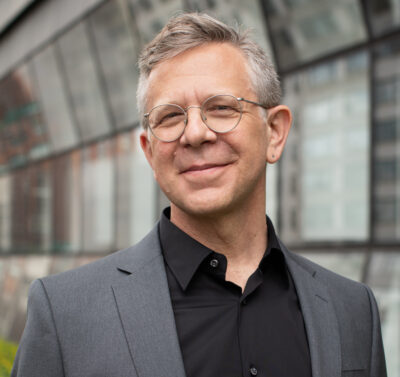
University President and University Professor of Architecture and Sustainable Design, The New School
Joel Towers is the President of The New School and University Professor of Architecture and Sustainable Design. He has been at The New School for over 20 years, serving previously as the executive dean of the Parsons School of Design. As an architect, Towers has worked on projects that champion environmentally sustainable and socially responsible design. Towers has also played a key role in shaping New York City’s climate resilience strategy, co-chairing the New York City Panel on Climate Change. He earned a Master of Architecture from Columbia University.
Towers’ academic work focuses on the intersection of architecture, urban planning, and sustainability, with an emphasis on how design solutions can address global environmental challenges. He is particularly interested in the role of architecture in mitigating climate change, designing energy-efficient and socially inclusive urban spaces, and fostering resilience in cities. Towers has published extensively on sustainable design practices, emphasizing the need for a holistic approach that integrates ecological, economic, and social considerations. His work at The New School has led to the creation of innovative programs that combine design thinking with policy and social justice, preparing students to lead in an era of rapid environmental and social transformation.
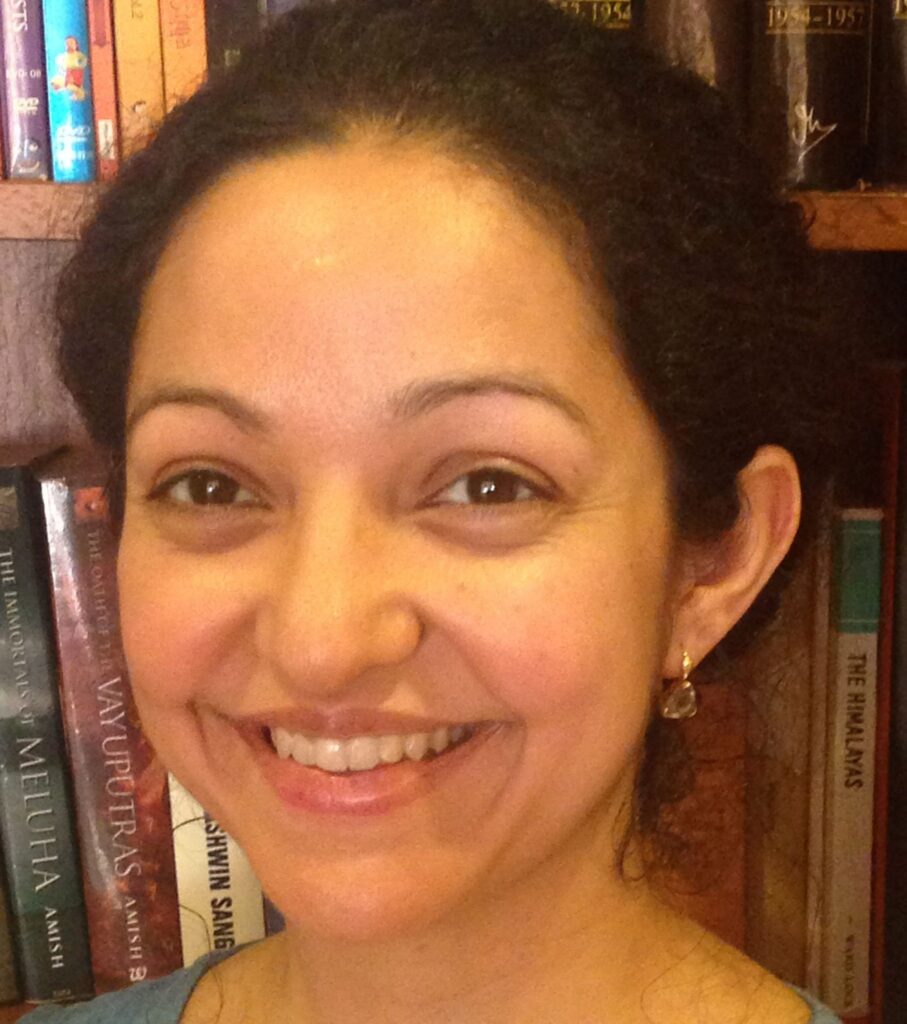
Co-Director, India China Institute; Associate Professor, Julien J. Studley Graduate Programs in International Affairs, Schools of Public Engagement
Manjari Mahajan’s work lies at the intersection of Science and Technology Studies, Development Studies, and Anthropology. Her research and teaching are on the topics of global health, philanthrocapitalism, and digital governance. Much of her empirical focus has been on India and South Africa, and more recently, on global organizations such as the Gates Foundation and the World Health Organization. She has held fellowships at the Asia Research Institute at the National University of Singapore, the Max Planck Institute for Social Anthropology at Halle, Germany, and the Social Science Research Council in the United States. Her papers have received prizes from the Society for Social Studies for Science and the American Anthropological Association. She received her PhD in Science and Technology Studies from Cornell University, her MSc in Science and Technology Policy from SPRU Sussex University, and her BA from Harvard University.
SPEAKERS

Professor of Social Sciences, Arizona State University
Craig Calhoun is University Professor of Social Sciences at Arizona State University. Prior to this position, he taught at Columbia University, New York University, where he founded the Institute for Public Knowledge, and the University of North Carolina at Chapel Hill, where he served as Dean of the Graduate School and directed the University Center for International Studies. He has also served as president of the London School of Economics, the Social Science Research Council, and the Berggruen Institute. He holds a PhD from Oxford University.
Calhoun has wide-ranging research interests, including critical global issues such as the future of democracy, the impact of technology on work and society, global political economy, and nationalism and social movements. Most recently, he is the co-author of Degenerations of Democracy and co-editor of The Green New Deal and the Future of Work. He is also the author of Neither Gods nor Emperors: Students and the Struggle for Democracy in China. Beyond academia, he is deeply involved in public service, sitting on advisory boards for organizations like the MasterCard Foundation and Reset Dialogues.

Apoorvanand Jha (Recorded Remarks)
Professor of Hindi, University of Delhi
Apoorvanand Jha is Professor of Hindi at the University of Delhi. He has taught previously at Magadh University and Mahatma Gandhi International Hindi University. He earned his Masters and PhD from Patna University. Jha was part of the core group that designed the National Curriculum Framework for School Education in 2005 and was a member of the national Focus Group on Teaching of Indian Languages formed by the National Council for Educational Research and Training.
Academically, Jha has worked on the development of Marxist aesthetics in Hindi literature, exploring how aesthetic and ideological dimensions of this literature reflect and shape societal values. Jha is also a columnist in leading newspapers, magazines, and online sites, broadly writing on issues of education, culture, communalism, violence, and human rights. He has published two books of literary criticism, Sundar Ka Swapna and Sahitya Ka Ekant.

Kellee Tsai
Dean and Distinguished Professor, College of Social Sciences and Humanities, Northeastern University
Kellee Tsai (PhD, Columbia University) is Dean of the College of Social Sciences and Humanities at Northeastern University. She previously served as Dean of the School of Humanities and Social Science at Hong Kong University of Science and Technology; and Vice Dean of Humanities and Social Sciences and Director of the East Asian Studies Program at Johns Hopkins University. Tsai is an international board member of the Asia Research Institute at National University of Singapore, the Center for Contemporary China Studies at National Tsinghua University, the Hong Kong Research Grants Council, the India-China Institute at the New School for Social Research, and Taipei School of Economics and Political Science. She has been a Public Intellectuals Program fellow at the National Committee on U.S.-China Relations since 2005.
Tsai’s research explores the political economy of China, focusing on authoritarian capitalism, informal institutions, party-state capitalism, surveillance, and reverse migration and remittances in China and India. She is the author or editor of seven books, including Back-Alley Banking: Private Entrepreneurs in China (2002), Capitalism without Democracy: The Private Sector in Contemporary China (2007), State Capitalism, Institutional Adaptation and the Chinese Miracle (2015), and The State and Capitalism in China (2023). Her research has been supported by the Ford Foundation, Fulbright-Hays, the Harvard Academy for International and Area Studies, the Hong Kong Research Grants Council, and National Science Foundation.
MODERATOR

Mark Frazier
Co-Director, India China Institute; Professor of Politics, The New School for Social Research
Mark Frazier is Professor of Politics at The New School for Social Research and Co-Director of the India China Institute at The New School (New York City). His research interests include labor and social policy in China, and the politics of citizenship and urban protest in China and India. He is the author of The Power of Place: Contentious Politics in Twentieth Century Shanghai and Bombay (2019), Socialist Insecurity: Pensions and the Politics of Uneven Development in China (2010), and The Making of the Chinese Industrial Workplace (2002). He has authored op-ed pieces and essays for The New York Times, Daedalus, and The Diplomat. Frazier serves on the editorial board of China Quarterly and is a Faculty Associate at Columbia University’s China Center for Social Policy. He received a Fulbright Research award in 2004-05, and has been a Public Intellectuals Program fellow at the National Committee on U.S.-China Relations since 2005.
India China Institute at The New School