

Annual India China Day
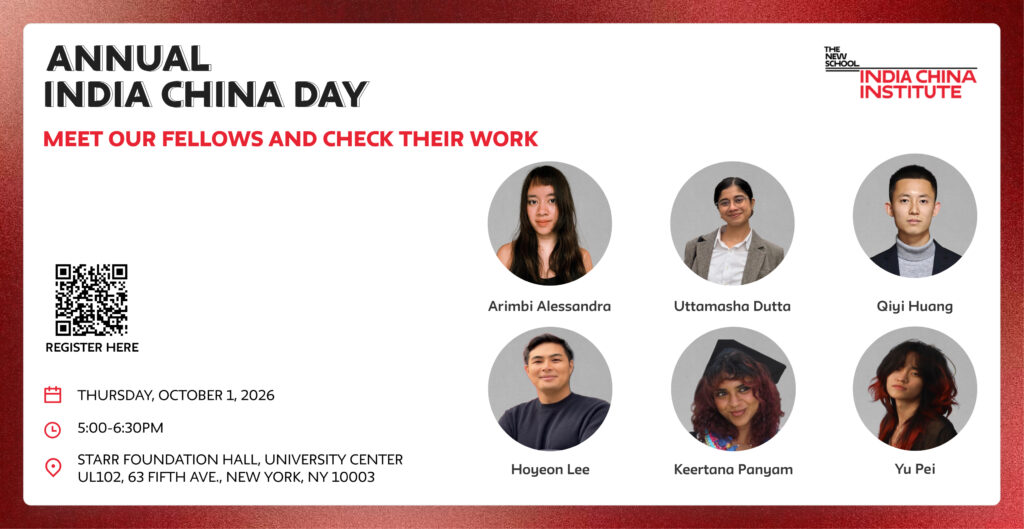
Starr Foundation Student Fellowship is a funding opportunity for selected students of The New School to pursue their own research projects.
India China Day is a celebration of our student fellows and the broader community—an invitation for students, faculty, and staff to come together, enjoy authentic Indian and Chinese food, make new friends, exchange ideas, and learn about the fascinating research our Starr student fellows are pursuing.
This year’s six student fellows include three PhD students, two MA candidates, and one BFA student from across the New School for Social Research and the Parsons School of Design. Their projects span a fascinating range of topics—from exploring the production of eri silk in Assam, India, to examining people’s theater in post-martial-law Taiwan and investigating women’s participation in the global hair industry. Together, their projects reflect the diverse interests, perspectives, and expertise of our student community.
Come celebrate our fellows, discover their research, share a meal, and find inspiration for your own research ideas.
SPEAKERS
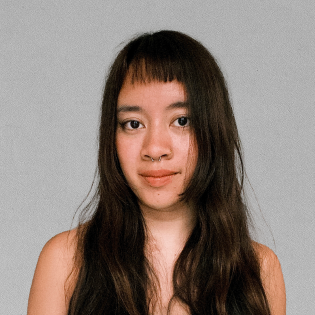
Arimbi Alessandra
PhD student in Public and Urban Policy at the New School for Social Research
The Unfolding In Three Acts: Act I: ancestry/lineage as method—migratory afterlives; Act II: inherited forgetting/remembrance in the absence/presence of archives; Act III: fragments of memory—tradition, mysticism/superstition, and collective life
The Unfolding In Three Acts traces how lineage, collective care, and everyday belief persist under conditions of migration and archival absence. “Act I: ancestry/lineage as method—migratory afterlives” takes a family history marked by fragmentation across centuries as an entry point. “Act II: inherited forgetting/remembrance in the absence and presence of archives” examines how remembrance operates between absence and presence, asking what forms of knowledge persist when written records fall silent. “Act III: fragments of memory—tradition, mysticism/ superstition, and collective life” approaches rituals, cooperation and belief as epistemic practices organizing obligation and care.
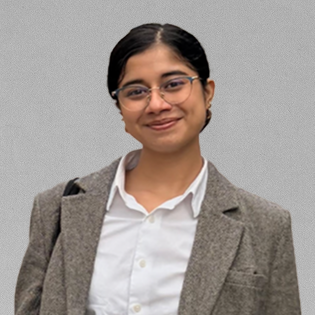
Uttamasha Dutta
PhD student in Anthropology at The New School for Social Research
Ordinary Silk: Eri, Exchange, and Everyday Life
Through two phases of ethnographic fieldwork across Nagaon, Morigaon, and Karbi Anglong districts in India, this project follows what eri silk sets in motion, what circulates, what obligations it sustains, and what sustainability looks like as lived practice rather than brand. The project provides ethnographic grounding for the following questions: When does eri enter global markets? Which practices of production become legible as ethical? Which remain invisible, and how?

Qiyi Huang
MA student in Liberal Studies at The New School for Social Research
Bodies of the People: People’s Theater and Political Subjectivity in Post-Martial Law Taiwan
The project examines people’s theater in post-martial law Taiwan as a site where “the people” as a political subject takes shape. Drawing on critical theory and political aesthetics, it investigates how documentary drama and Theatre of the Oppressed do not merely represent an already-existing people, but actively constitute—through embodied participation, collective rehearsal, and theatrical encounter—the imaginaries and bodily presence through which communities come to recognize themselves as historical actors.

Hoyeon Lee
PhD candidate in Public and Urban Policy at The New School for Social Research.
Programming Workers? Algorithmic Control and the Institutionalization of Autonomy in Kerala’s Collective Landscape
The project explores how algorithmic management operates as an informal labor market institution in Kerala, India. While digital platforms promise autonomy and flexibility, they often introduce new forms of discipline that reshape worker subjectivity and social relations. This study investigates how algorithmic control functions within Kerala’s distinctive institutional context, where strong traditions of collective organization coexist with high levels of education and persistent youth unemployment.
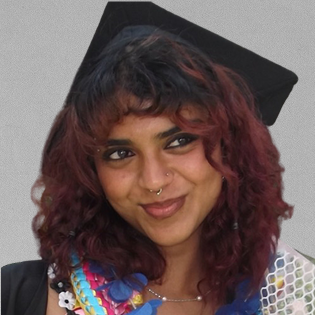
Keertana Panyam
BFA student in Design History and Practice at the Parsons School of Design
Intergenerational Indian Women’s Perspectives on the Human Hair Trade
The project examines the question: What does it mean to “ethically source” full, long, and healthy hair for the global hair industry? How often do women in India participate in this industry and willingly give up decades’ worth of hair? What does “willingness” entail for these women and their circumstances? This qualitative research centers social and gender-justice methods for conducting multigenerational familial interviews among women living in peripheral southern India’s epicenters of unprocessed human hair smuggling.

Yu Pei
MA student in Anthropology at The New School for Social Research
Dancing on the Ruins: Raving Bodies, Psychological Landscape, and Future Imagination in Contemporary China
The project examines underground rave scenes in contemporary China as a form of endurance and its embedded ethics of escape amid widespread feelings of hopelessness and future rejection. Situating rave within broader affective conditions among Chinese youth, this project explores how rave constitutes an experimental response to various psychological tensions in everyday life, and to the collapse of future imagination under the disillusioned promise of a path to success.