

Competing for the Global South: India-China Competitive Cooperation in a Multipolar World
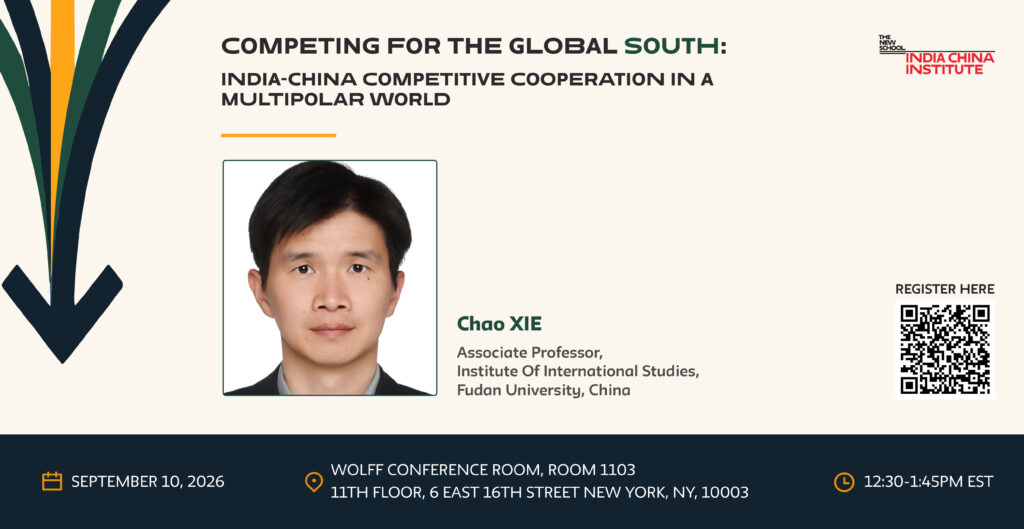
In the context of Global South narratives and practices, the India-China relationship can best be characterized as competitive cooperation. Driven by both strategic calculations and pragmatic considerations, the two countries compete for strategic space and political influence while simultaneously cooperating in areas where their interests overlap. Understanding this complex relationship requires examining how India and China engage in debates over Global South identity, pursue different development paths and working patterns with the North, and participate in the construction of new institutional mechanisms. That’s why their interaction demonstrates “uncoordinated coordination” in certain issue areas despite differences in their responses to the Israel-Palestine conflict and the more recent U.S.-Israel-Iran confrontation. Ultimately, their competitive cooperation relationship over divergent strategic interests, competing national priorities, and different interpretations of global order are helping the Global South, as a loosely connected community of nations, develop shared understanding, build collective strength, and explore its own path of development and global engagement.
SPEAKER
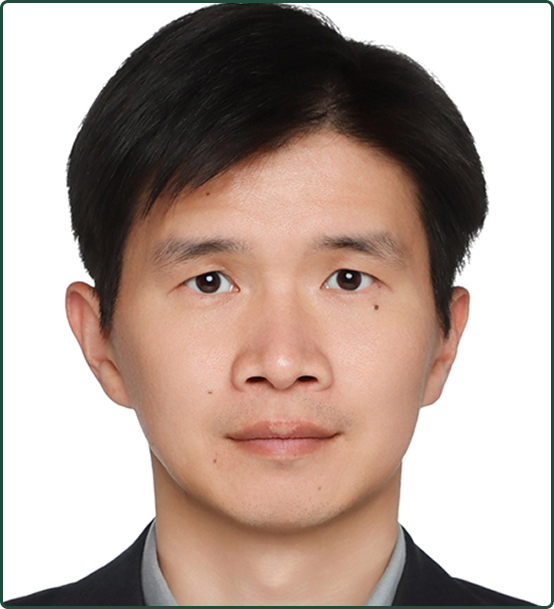
Chao XIE
Associate Professor
Institute of International Studies
Fudan University, China
XIE Chao is Associate Professor at the Institute of International Studies, Fudan University and Associate Editor-in-Chief of Quarterly Journal of International Politics. He earned his PhD in International Relations from Tsinghua University in 2018. He served as Visiting Scholar at Harvard-Yenching Institute (2025-2026), and Visiting Faculty Scholar at O.P. Jindal Global University, Haryana, India (2018-2020). He was Bangalore Fellow (The Takshashila Institution, July 2019), Raisina Young Fellow (Observer Research Foundation, January 2020) and Kautilya Fellow (India Foundation, January 2020). He also held visiting scholar positions at Jawaharlal Nehru University in 2014 and 2015, and University of Oxford from 2013 to 2014. He published two books and dozens of peer-reviewed journal articles. His research interests span the politics and foreign policies of South Asia and the Global South more broadly, with a particular focus on India. His broader scholarly interests also encompass great power relations and international relations theories.