

Concluding Panel: India and China in the Making of a Post Liberal World
SPEAKERS

Prasenjit Duara is the Oscar Tang Chair of East Asian Studies at Duke University. He has held teaching positions at the National University of Singapore, as well as the University of Chicago, where he was the Chair of the Department of History and Chair of the Committee on Chinese Studies. He holds a PhD in Chinese history from Harvard University.
Duara works in the fields of modern Chinese history, decolonization, and the global history of modernity. His scholarship questions the conventional understanding of the nation-state, sovereignty, and colonialism; additionally, Duara’s work offers new frameworks for analyzing the cultural and political dimensions of modernity in East Asia. His books include Culture, Power and the State: Rural North China, 1900-1942, which won the Fairbank Prize, and The Crisis of Global Modernity: Asian Traditions and a Sustainable Future. Following the publication of the latter, Duara was awarded the doctor philosophiae honoris causa from the University of Oslo in 2017.
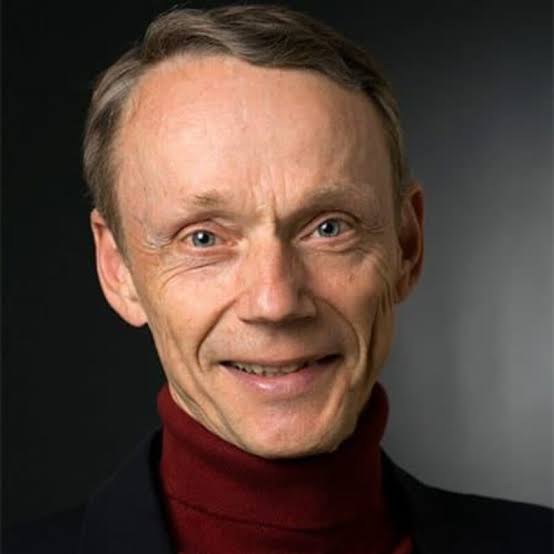
Walter S. Carpenter, Jr. Professor of International Studies, Cornell University
Peter J. Katzenstein is the Walter S. Carpenter, Jr. Professor of International Studies at Cornell University. He has been a longtime faculty member at Cornell and has played a central role in shaping the university’s programs in international relations and political science, including as editor of the Cornell Studies in Political Economy. Katzenstein has also served as President of the American Political Science Association and has been involved in numerous interdisciplinary initiatives across global academic institutions. He holds several honorary degrees, including from the Peking University and the University of Antwerp, and was awarded the 2020 Johan Skytte Prize in Political Science. Katzenstein earned his PhD from Harvard University.
Katzenstein’s work spans the disciplines of international relations, political economy, and comparative politics. His research explores the role of culture, identity, and regionalism in world politics, with a focus on Europe and Asia. His most recent books are Uncertainty and Its Discontents: Worldviews in World Politics, and Protean Power: Exploring the Uncertain and Unexpected in World Politics, co-edited with Lucia Seybert. He is also the author of A World of Regions: Asia and Europe in the American Imperium, and has a forthcoming book titled Entanglements in World Politics: The Power of Uncertainty. Katzenstein is actively engaged in scholarly communities, serving on editorial boards for journals such as International Organization and World Politics, and is a member of the American Academy of Arts and Sciences as well as the British Academy.

Distinguished Professor, College of Social Sciences and Humanities, Northeastern University
Kellee Tsai (PhD, Columbia University) is Dean of the College of Social Sciences and Humanities at Northeastern University. She previously served as Dean of the School of Humanities and Social Science at Hong Kong University of Science and Technology; and Vice Dean of Humanities and Social Sciences and Director of the East Asian Studies Program at Johns Hopkins University. Tsai is an international board member of the Asia Research Institute at National University of Singapore, the Center for Contemporary China Studies at National Tsinghua University, the Hong Kong Research Grants Council, the India-China Institute at the New School for Social Research, and Taipei School of Economics and Political Science. She has been a Public Intellectuals Program fellow at the National Committee on U.S.-China Relations since 2005.
Tsai’s research explores the political economy of China, focusing on authoritarian capitalism, informal institutions, party-state capitalism, surveillance, and reverse migration and remittances in China and India. She is the author or editor of seven books, including Back-Alley Banking: Private Entrepreneurs in China (2002), Capitalism without Democracy: The Private Sector in Contemporary China (2007), State Capitalism, Institutional Adaptation and the Chinese Miracle (2015), and The State and Capitalism in China (2023). Her research has been supported by the Ford Foundation, Fulbright-Hays, the Harvard Academy for International and Area Studies, the Hong Kong Research Grants Council, and National Science Foundation.
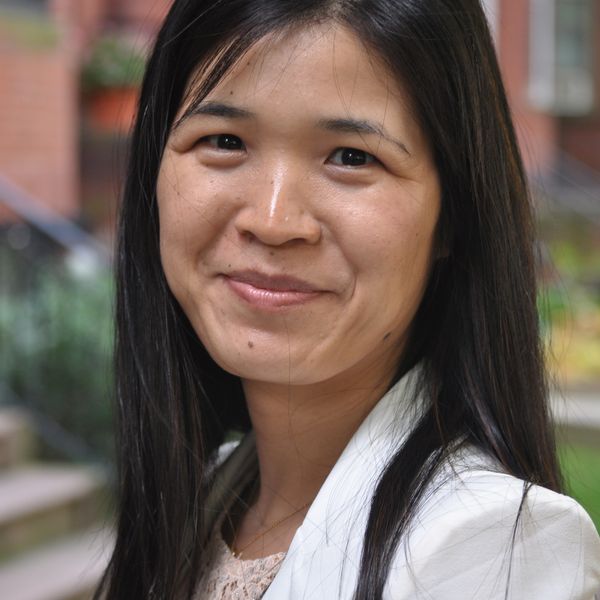
Min Ye is a Professor of International Relations at the Pardee School of Global Studies at Boston University. Ye has received numerous grants and fellowships, including the Smith Richardson Foundation grant and the East Asia Peace, Prosperity, and Governance Fellowship. She was also selected as a Public Intellectual Program fellow by the National Committee on U.S.-China Relations and as the Rosenberg Scholar of East Asian Studies at Suffolk University. She holds a PhD from Princeton University.
Ye’s research interests include Chinese political economy, China and India comparison, East Asian international relations, and globalization, focusing on transnational immigration and foreign investment. Her research is particularly relevant for understanding the complexities of China’s Belt and Road Initiative and its growing influence around the world. Ye is the author of The Belt, Road and Beyond: State-Mobilized Globalization in China 1998–2018 and Diasporas and Foreign Direct Investment in China and India. Her published journal articles cover topics such as the impact of China’s Belt and Road Initiative, the role of diasporas in foreign direct investment, and the intersection of globalization with regional and national political agendas.