

Contesting History and Memory
Remembrance of the past, inscribed in textbooks, museums and monuments, has in large part always been a political act. In our contemporary world, states and social forces have increasingly challenged established historical narratives by making appeals to identity and grievance. This panel engages in questions of contested memory and remembrance in 21st century India, China and the US, including historical events that have been subject to reinterpretation and censorship, the legacies of colonialism and its impacts on collective memory, and the reframing of history and heritage in schools and museums to transmit new forms of collective memory.
SPEAKERS
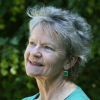
Jane Burbank is Professor Emerita of History and Russian and Slavic Studies at New York University. She has taught at NYU since 2002 and is active in the university’s initiatives in Russian, Eurasian, and global history. She is a member of NYU’s Jordan Center for the Advanced Study of Russia. Before joining NYU, she held faculty positions at Harvard University, the University of California, Santa Barbara, and the University of Michigan. She directed UM’s Center for Russian and East European Studies for several years in the 1990s. She now spends part of each year in Paris and is a member of CERCEC (Centre d’études russes, caucasiennes, est-européennes et centrasiatiques) at the École des Hautes Études en Sciences Sociales. She holds a PhD from Harvard University.
Burbank’s research spans the fields of Russian, imperial, and legal history. Her work examines the dynamics of empire, law, and governance, particularly in Russian and Soviet contexts. Most recently, she is the co-author, with Frederick Cooper, of Post-Imperial Possibilities: Eurasia, Eurafrica, Afroasia, as well as Empires in World History: Power and the Politics of Difference. She is the author of Russian Peasants Go to Court: Legal Culture in the Countryside, 1905–1917 and Intelligentsia and Revolution: Russian Views of Bolshevism, 1917–1922, and the co-editor of Russian Empire: Space, People, Power, 1700–1930 and Imperial Russia: New Histories for the Empire. Burbank is an active participant in international academic networks and projects on empire and legal history. With Frederick Cooper, she received the Toynbee Prize for the study of global history in 2023.

Prasenjit Duara is the Oscar Tang Chair of East Asian Studies at Duke University. He has held teaching positions at the National University of Singapore, as well as the University of Chicago, where he was the Chair of the Department of History and Chair of the Committee on Chinese Studies. He holds a PhD in Chinese history from Harvard University.
Duara works in the fields of modern Chinese history, decolonization, and the global history of modernity. His scholarship questions the conventional understanding of the nation-state, sovereignty, and colonialism; additionally, Duara’s work offers new frameworks for analyzing the cultural and political dimensions of modernity in East Asia. His books include Culture, Power and the State: Rural North China, 1900-1942, which won the Fairbank Prize, and The Crisis of Global Modernity: Asian Traditions and a Sustainable Future. Following the publication of the latter, Duara was awarded the doctor philosophiae honoris causa from the University of Oslo in 2017.

Manu Goswami is Associate Professor of History at New York University. She serves on the editorial boards of The American Historical Review, Public Culture, and Critical Historical Studies. Her work has appeared in The American Historical Review, Comparative Studies in Society and History, the Journal of Historical Sociology, and Constellations, among other journals. She received her PhD in Political Science from the University of Chicago.
Goswami’s research has focused on the history of capitalism, political economy, nationalism, social theory, and the history of economic thought. More specifically she has examined colonial and post-colonial legacies of economic development in modern India. Her most recent book, Political Imaginaries in Twentieth Century India, was published in 2022, and she is also the author of Producing India: From Colonial Economy to National Space. Goswami’s research also delves into the broader history of economic thought, analyzing the intersections between political and economic change in South Asia.
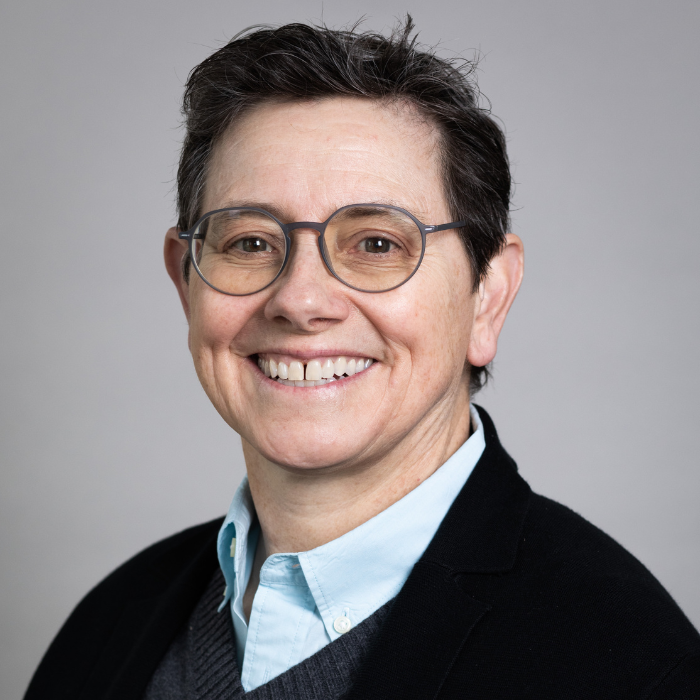
Claire Potter is Professor Emerita of History at The New School for Social Research, where she previously served as co-executive Editor of Public Seminar, a digital platform for intellectual and political debate. Before joining The New School, she was part of the faculty at Wesleyan University and held visiting positions at institutions such as Yale University and the University of Michigan. She earned her PhD in History from New York University.
Potter’s work spans the fields of U.S. political history, gender and sexuality studies, and digital humanities, examining the intersections of media, politics, and social movements in modern America. Her most recent book, Political Junkies: From Talk Radio to Twitter, How Alternative Media Hooked Us on Politics and Broke Our Democracy, explores the rise of alternative political media in the United States. She is also the author of War on Crime: Bandits, G-Men, and the Politics of Mass Incarceration in American History. Potter has published work in outlets such as The New York Times, The Washington Post, Politico, Jacobin, and Dissent, and has run several blogs, the current being her Substack Political Junkie. She also on editorial boards for journals such as Feminist Studies and The Journal of American History.
MODERATOR
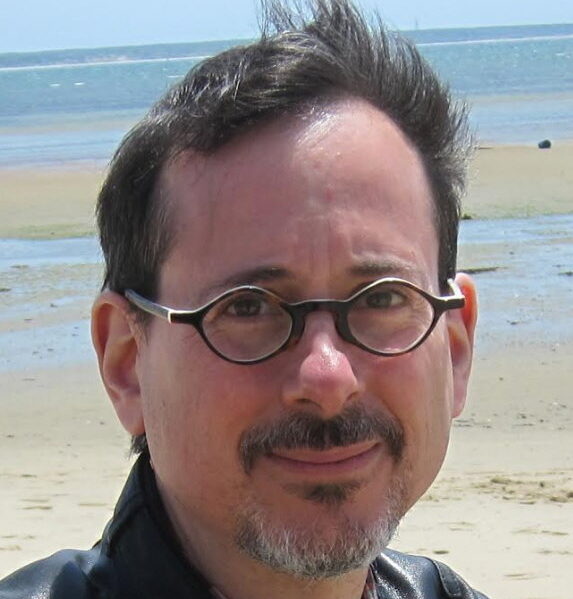
Jonathan Bach is Professor of Global Studies at The New School. He is a longtime ICI faculty advisor, a faculty affiliate at ICI. He has also served as the founding Chair of the Global Studies Program and Associate Director of the Graduate Program in International Affairs at The New School. Bach held postdoctoral positions at Harvard University and Columbia University after receiving his PhD in political science from the Maxwell School of Citizenship and Public Affairs at Syracuse University. He has also held visiting positions at institutions such as Columbia University, Humboldt University in Berlin, and the Institute for Peace Research and Security Studies in Hamburg.
Bach’s work spans the disciplines of anthropology, sociology, and politics. His work examines social change following economic, political, and cultural disruption, especially in the post-socialist world. His most recent book is What Remains: Everyday Encounters with the Socialist Past in Germany. Bach was also the co-editor of Re-Centring the City: Urban Mutations, Socialist Afterlives, and the Global East, as well as Learning from Shenzhen: China’s Post-Mao Experiment from Special Zone to Model City. He is actively involved in scholarly communities, serving on editorial boards for journals such as German Politics and Society and Sociologica, as well as a faculty affiliate at Columbia University’s Center on Organizational Innovation.
India China Institute at The New School
April 25, 2025
, 1:30 pm
–
3:30 pm