
Platforms in Workers’ Own Country
What happens when Uber enters a city with strong labor market institutions?
What happens when Uber enters a city with strong trade unions, a left-led government, and established worker protections? I traveled to Thiruvananthapuram, the capital of Kerala, to examine this question. Kerala combined four conditions that seemed likely to constrain Uber: left-led parties and government, powerful trade unions, an extensively regulated transport labor market, and a strong culture of collective organization. At the same time, its high levels of education, purchasing power, and digital infrastructure provided ample room for platforms to expand. Kerala brought together the conditions for platform growth and the institutions that seemed most likely to regulate it.
Ubers on Different Urban Transport Systems: Labor Market Instituions Matter
My experiences studying and using platforms across cities led me to question whether a common app necessarily produces a common platform model. In Singapore, Uber became Grab, and conventional taxis were sometimes cheaper than app-based rides. In Seoul, Uber’s market entry was repeatedly blocked. When passengers called a car through the Korean platform Kakao T, an existing licensed taxi arrived and switched on a regulated meter. In New York, by contrast, app-based drivers had already become part of the everyday urban landscape. Similar-looking apps connected passengers to different transport operators, fare systems, regulations, and pathways into work.
More fundamentally, dispatch, pricing, and passenger intermediation did not begin with the smartphone. These functions had long been performed by taxi companies, public regulators, dispatchers, occupational organizations, and drivers themselves. Platforms therefore appeared less like self-contained systems than programs installed on labor markets that already operated differently. They resembled the same “Uber” program running on different hardware—CPU, RAM, and motherboard—and different operating systems—Microsoft Windows, macOS, or Linux. The interface might look similar, but what the program could do depended on the system beneath it.
Kerala, and Thiruvananthapuram in particular, seemed to possess the operating system most capable of controlling Uber. Its left political institutions, powerful unions, transport regulations, and collective norms already organized how workers entered the market, gained access to passengers, received remuneration, and shared social risks. At the same time, Kerala possessed the educational, economic, and technological hardware required for app-based transport to expand. What would happen when the Uber program was installed on this system?
Why Kerala?
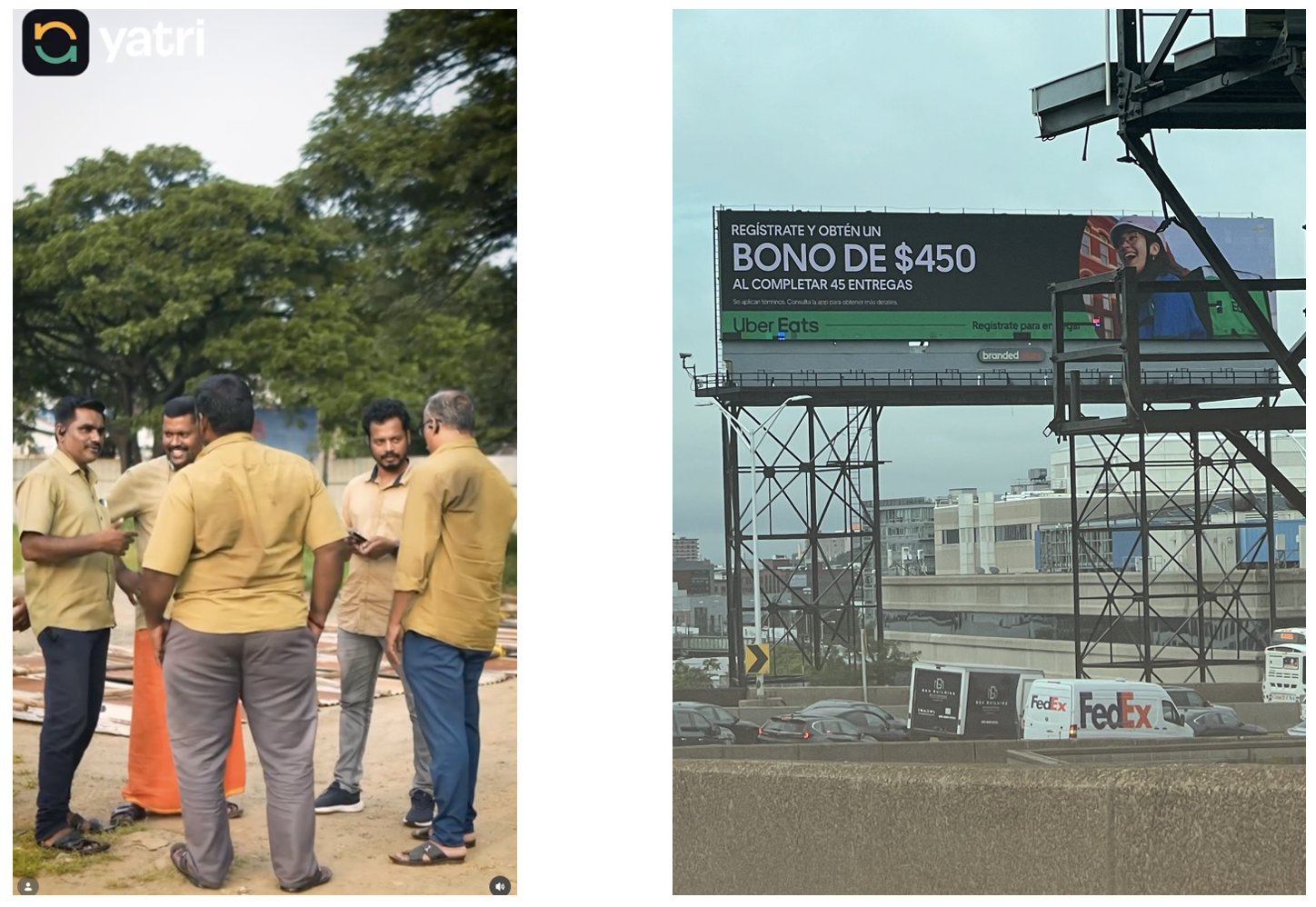
Figure1. Advertisement by Yatri Kerala (Instagram, December 26, 2024)
Figure 2. Billboard Advertisement on the Lincoln Tunnel Approach (New Jersey to Manhattan)
* Editor’s note: If possible, please embed the original Instagram post directly here: https://www.instagram.com/p/DECdJotzF5U/
* Editor’s note: If possible, please embed the original Instagram post directly here: https://www.instagram.com/p/DECdJotzF5U/
——————–
“His journey is an inspiration. Once a daily wage earner, he found his path with Yatri, now earning more, living happily, and ensuring safe and affordable rides for every passenger.”
— Advertisement by Yatri, a mobility app in Kerala, December 26, 2024
Placed beside a US platform advertisement centered on a numerical bonus, the Yatri advertisement condensed what appeared distinctive about Kerala. Platform promotions I had encountered in the United States usually emphasized measurable tasks and short-term financial rewards: “Complete 45 deliveries and receive a $450 bonus.” I had rarely seen a platform, despite depending on thousands of workers, present workers’ livelihoods and family lives as part of the public purpose of its service. Workers were more often treated as those expected to concede some of their time, income, and exposure to risk so that the platform could generate revenue. Yatri, by contrast, described a former daily-wage worker who earned more, lived happily, and provided safe and affordable transportation through the platform.
An advertisement cannot establish that a platform actually improves working conditions. Yatri’s language nevertheless raised a substantive question. Why did a mobility platform in Kerala consider a worker’s life an appropriate subject of public advertising? Could Kerala’s political culture and its valuation of labor affect not only how a platform represented itself, but also the rules through which workers entered the market, obtained work, earned income, and received protection?
- Political Channels Built Through Left Politics and Trade Unions
Kerala’s political history provided grounds for asking this question. Left politics and labor movements, led principally by the Communist Party of India (Marxist) and the Communist Party of India, helped translate worker protection into public policy (Heller, 1996, 1999; Isaac & Franke, 2002). Trade unions are not peripheral organizations within this system. Their connections to the state’s major political coalitions provide channels through which workplace demands can be converted into political claims. - Public Protection Extending to Informal and Self-Employed Workers
Worker protection in Kerala extends beyond conventional wage employment. The state government operates multiple statutory welfare-fund boards covering informal and self-employed workers. The Kerala Motor Transport Workers Welfare Fund provides eligible members, including self-employed transport workers, with pensions and medical, maternity, and death-related benefits. The state also intervenes in urban passenger transport through licensing and officially prescribed fares. Prices and social risks are therefore not left entirely to individual drivers and market exchange.
**Editor’s note: If possible, please hyperlink the following source here:
– Kerala State Planning Board. (2025). Economic review 2025. Government of Kerala.
– hyperlinked (https://spb.kerala.gov.in/economic-review/ER2025/index.php)
- Stands Organizing Entry and Work Allocation
Autorickshaw and taxi stands constitute another form of labor-market institution. Registration, union relationships, and eligibility to use particular stands regulate who may enter valuable operating spaces. Queue systems distribute passengers among drivers. Unions and stands therefore do more than represent workers’ interests: they directly govern entry into the labor market and the allocation of work. - Socioeconomic Conditions Supporting Platform Expansion
Kerala simultaneously possesses the conditions required for digital platforms to expand. High educational attainment and relatively strong purchasing power support both demand for app-based transport and the capacity to use it. The spread of smartphones, telecommunications networks, and digital payments lowers barriers to platform participation for passengers and drivers. Kerala is neither isolated from platformization nor institutionally similar to the places in which the dominant platform model first developed. Strong labor institutions and favorable conditions for platform growth coexist within the same urban labor market.
Looking at the Labor Market Between Capitalism and the Algorithm
I examine this encounter at the middle level of the labor market. The general claim that capitalism produces exploitation is too broad to explain why the same platform operates differently across cities. Asking only whether an algorithm is transparent is too narrow to explain how platform rules encounter governments, unions, occupational communities, and public systems of protection. The labor market provides a level of analysis at which these relationships can be examined together.
Research on internal labor markets, employment systems, and fissured workplaces is particularly important for analyzing the encounter between Kerala and Uber. Internal labor-market theory shows that entry, allocation, and remuneration are organized through durable administrative rules rather than market prices alone. Employment-systems theory examines the rules that classify tasks and competencies and define the boundaries of managerial authority. Research on fissured workplaces demonstrates that the actor controlling labor can be separated from the actor bearing employment costs and risks. By connecting the problems addressed in these three bodies of research, this study examines six labor-market functions: entry, allocation, pricing and remuneration, evaluation, exclusion, and the distribution of responsibility and risk.
The study therefore asks who controls these established labor-market functions after a platform enters an already organized urban transport market. Does Kerala’s officially prescribed fare shape platform prices? Do statutory welfare funds protect platform drivers while also extending the platform’s responsibilities? Can unions and stands intervene in dispatch, commissions, ratings, or account deactivation? Do established sources of work enable drivers to reject platform rules, or do stand-based work and app-based requests become intertwined within a single labor process?
The initial expectation was clear. If institutional context changes how platforms organize labor, that difference should be especially visible in Kerala. The question for the fieldwork was therefore equally clear: could the institutions that had long organized transport work in Kerala extend their authority into the platform itself?