
Where Are the People? Notes from a Theater Company’s Twentieth Anniversary
Before I flew to Taiwan, I had a small, slightly embarrassing problem: I couldn’t find much recent writing about my subject. My research is on people’s theater, a tradition of community-based, politically engaged performance, and almost everything I could find about Taiwan was years old. From my desk in New York, I had started to wonder whether the movement had faded from view.
It turned out I had been looking in the wrong place. My trip overlapped with two public events for the twentieth anniversary of the Center for Applied Theatre Taiwan (CATT), a company I had been reading about for months. In one, the company reviewed twenty years of its own work while three invited respondents critiqued it. The other was a day of small-group conversations among practitioners.
Applied theater leaves an uneven archive. There are no long commercial runs to follow and no steady stream of productions. The work happens in workshops, short projects, and conversations like these, and if you aren’t there, it is hard to tell that anything is happening at all.
At the anniversary session, one practitioner told a story from around 2006. The company had been hired through a national community-building program to bring theater into communities across Taiwan. From application to final report, it had roughly eight months.
In one rural community, a group of grandmothers sat through a series of theater games. Then one of them spoke up. As the practitioner told it, the question was something like: what exactly are you here to teach us? Teach us something, or let us go home and watch TV. The women left, one after another.
She panicked, partly because the project deadline was already running. The next week she drove back, stayed in one of the women’s homes, and did what the household did. She went with her host to the sea to fill buckets with seawater for pickling vegetables. Only then did she understand the objection. The women weren’t refusing theater. They were refusing games offered in place of teaching. Someone had traveled a long way to arrive as a teacher, and they expected her to teach. She rebuilt the workshop from there.
One of the respondents, a sociologist, read the episode differently. In his account, the walkout was a moment when the community showed itself as a subject with a voice. From the grandmothers’ side, the person running the workshop stood in for the government program that had sent her, and leaving was their answer to that. In the company’s own written account, the episode had appeared as a problem to be solved.
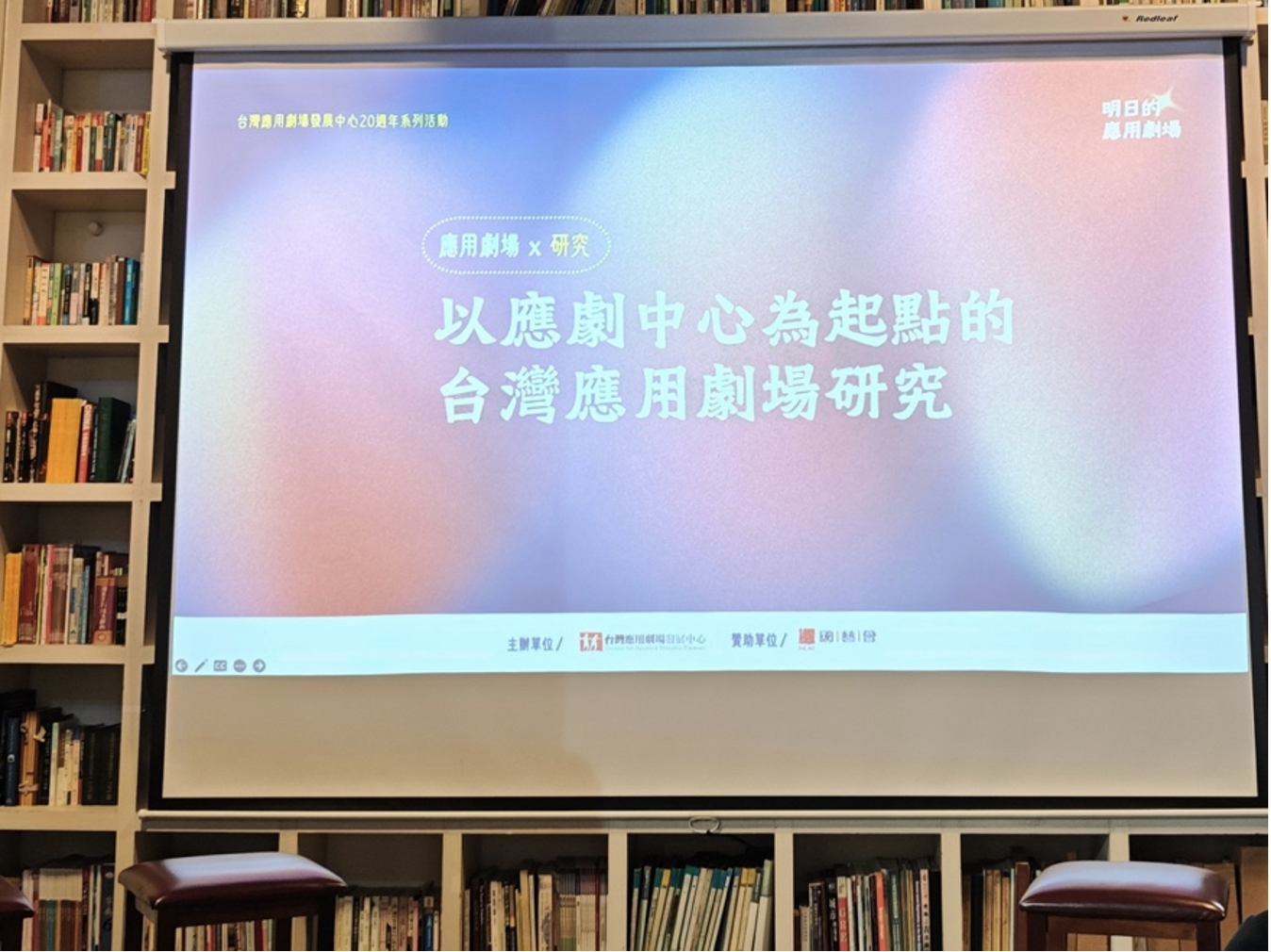
I had come to Taiwan with a literal question: where are “the people” in people’s theater? The community-building programs seemed to offer an answer. People belonged to communities, and communities were places with local histories that cultural workers could enter and help articulate. CATT’s own experience kept disturbing that picture. Communities competed with one another for funding. Project staff came and went. The administrative unit called a “community” did not necessarily contain a stable collective. It occurred to me, sitting in that room, that the problem might be the map. Perhaps “the people” were never going to stay inside the neighborhoods assigned to them.
By around 2015, CATT had begun working with migrant workers, mostly Filipinos, staying in a shelter for workers who had fled abusive employers. Residents typically stayed only two or three months, so the group kept changing. Over one nine-month cycle, nearly eighty people passed through, and about thirty took part in the final production, performed in Tagalog with Chinese subtitles. It began, I was told, with a single exercise in which participants made a frozen image of “the Philippines.” One group chose poverty. Their image had four figures: a vagrant, a beggar, a drunk, and an unemployed man. The play grew out of a question about those four bodies: why were they there?
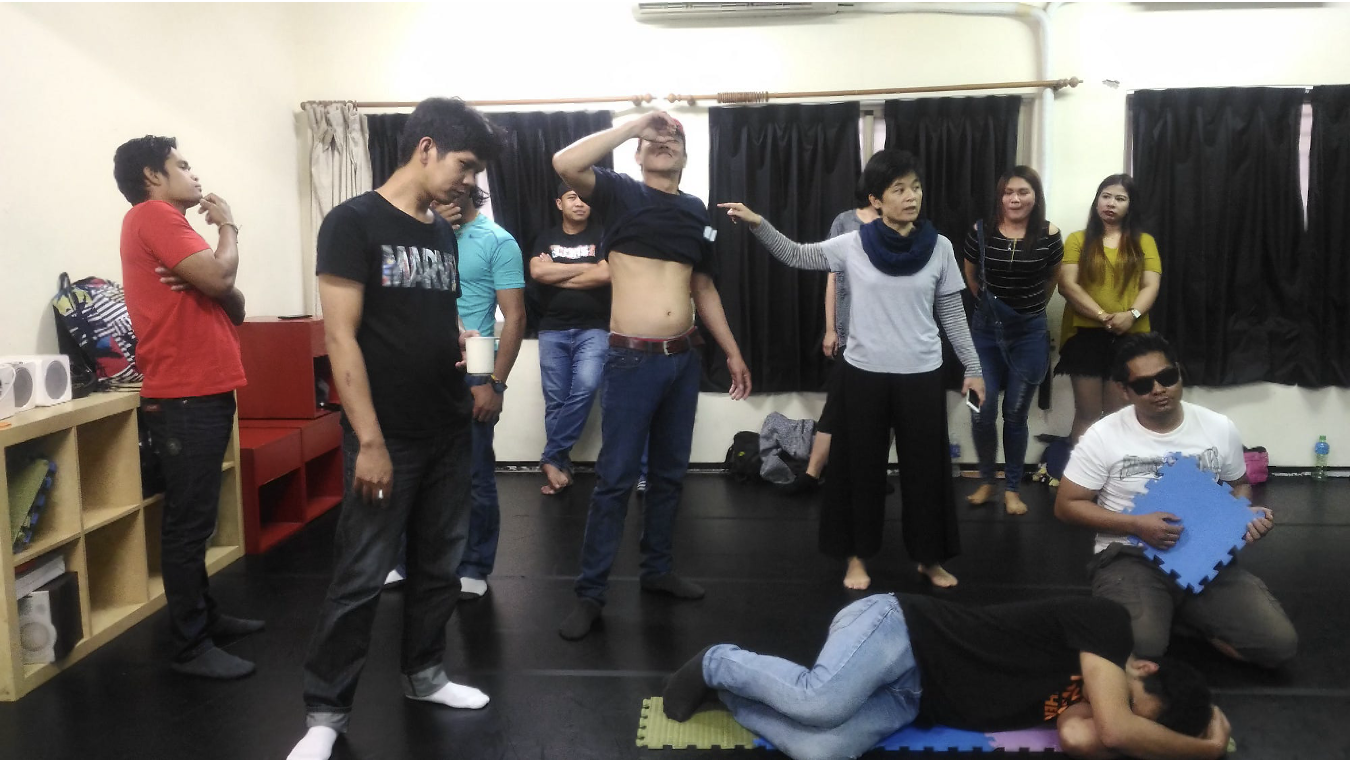
(Image source: Center for Applied Theatre, Taiwan)
I don’t think this settles where the people are, and CATT doesn’t seem to think it does either. What stayed with me from the anniversary was how openly the company let the question stay unsettled. From New York, I had been looking for proof that a movement still existed. In Taiwan I found a twenty-year-old company still arguing in public about whom its work is for, and about whether the categories it once used to find “the people” still work.